When people look at a finished commercial video or a polished brand photograph, they usually see the end product: the perfect lighting, the clean audio, the smooth camera tracking, and the cinematic color grade. It looks effortless, and honestly, that’s exactly the point. If we’ve done our job right, the viewer should just be completely immersed in the story without thinking about how it got there.
But the reality? What happens behind the lens to get to that final master file is a massive, highly calculated operation.
A professional production doesn’t just happen when you click the shutter or hit the red record button. By the time we even roll onto a location and start setting up tripod legs, about 70% of the heavy lifting has already been done in the dark.
If you’ve ever wondered how a professional campaign actually comes together, here is a look behind the curtain at how we take a rough idea and turn it into high-end media.
Phase 1: The Blueprint (Pre-Production)
I always tell clients that a shoot lives or dies before we ever pack a camera bag. You can have the most expensive cinema rigs in the world, but if you don’t have a bulletproof blueprint, you’re just shooting in the dark.
This is the phase where we sit down and map out the exact strategy. We don’t just ask “What do you want this to look like?”—we ask “What do you want this video to achieve for your business?”
Once we have our target, we build the foundations:
-
Concept & Storyboarding: Mapping out the visual flow so everyone on the team knows exactly what frames we need to capture.
-
The Shot List: A meticulous, minute-by-minute breakdown of the day. If we are shooting on a fast-paced industrial site or a busy corporate office, we have to be incredibly efficient so we don’t disrupt the client’s daily operations.
-
Location Scouting: Analysing lighting angles, checking acoustics for clean audio, and planning safe setups.
Phase 2: Controlled Chaos (The Production Day)
The shoot day is where the energy switches. It’s a mix of precision execution and creative problem-solving. No matter how much you plan, a cloud will block your perfect sunlight, a machine on an active trade site will change schedule, or a boardroom interview will run over time. You have to be agile.
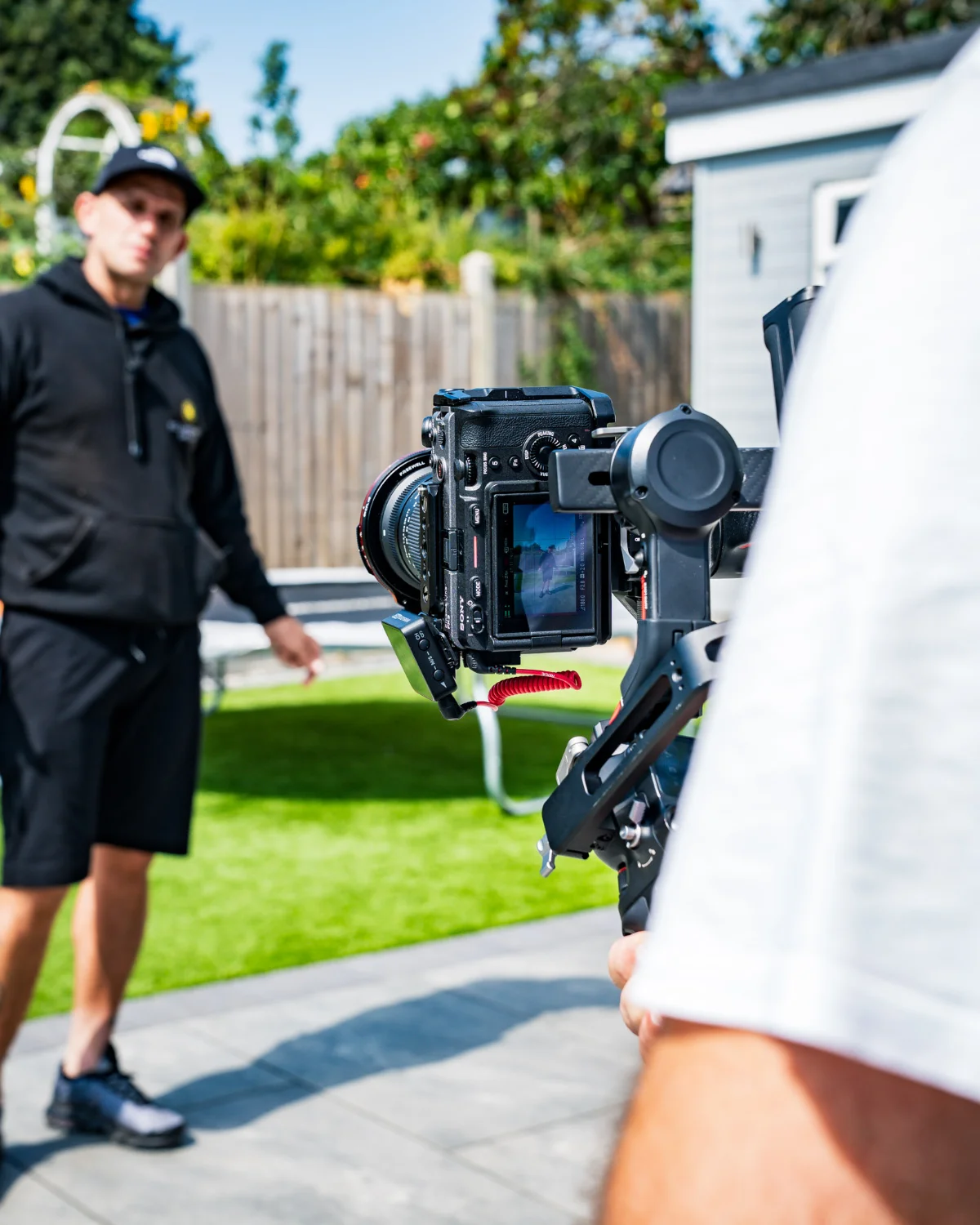
When we show up on set, the team unloads a massive amount of gear. We aren’t just bringing a camera; we are bringing a complete ecosystem:
-
Lighting Arrays: Shaping light to make a rugged factory floor look epic, or diffusing hard shadows to make a corporate headshot look clean and professional.
-
Audio Rigging: Wiring up lapel mics, positioning directional boom mics, and monitoring background decibels. Bad audio destroys good video instantly.
-
Camera Movement: Setting up stabilizing gimbals, sliders, and launching drones for high-altitude aerial context. Movement is what gives a video that undeniable “cinema” feel.
As director, my main job on set is managing that environment while making sure the people in front of the lens feel entirely comfortable. Most business owners or engineers aren’t professional actors—they get nervous when a huge cinema lens is pointed at them. Helping them relax so their authentic story comes through is where the real magic happens.
Phase 3: Forging the Film (Post-Production)
Once the gear is packed down and the data is safely backed up on multiple drives, the production moves into the quietest but most intense phase: the edit suite. This is where the raw ingredients are forged into the final piece.
I look at post-production like sculpting. We take hours of high-definition raw footage and systematically trim away the noise until only the best, most impactful story remains.
-
The Assembly Edit: Laying down the structural narrative, pacing the cuts to the rhythm of the soundtrack, and ensuring the visual flow hooks the viewer in the first three seconds.
-
Colour Science: Raw footage from cinema cameras looks completely flat and grey on purpose—it preserves the maximum amount of visual data. In the grade, we balance those exposures and inject custom color profiles, turning ordinary scenes into rich, moody, or vibrant cinematic visuals.
-
Sound Design: Adding subtle atmospheric ambient sounds, cleaning up vocal tracks, and mixing audio layers so the final film sounds massive, whether played on phone speakers or a massive boardroom presentation screen.
The Final Frame
A professional production is a complex puzzle with dozens of moving pieces, but when it all locks together seamlessly, it’s one of the most rewarding feelings in the world.
We don’t just create content to look pretty on a portfolio. We build custom visual assets designed to make your company look like the definitive leader in your market. It takes a lot of hidden grit, technical precision, and creative passion to make a film look effortless—but that’s the standard we bring to every single project.
See you on set,
Ronnie